
IBS With Normal Test Results
IBS with normal test results? Let’s discuss what’s actually going on
Most of my IBS clients describe a similar moment of frustration where they were diagnosed with IBS. The blood tests are back, the colonoscopy was clear, and someone says "Everything's normal."
It’s sort of an answer but you’re still left there thinking: then why am I in pain after eating? Why do I plan my day around bathrooms? Why is my belly a different size at 8pm than it was at 8am? How am I going to manage this long-term?
If your tests are normal but your gut isn't, there’s a reason for that and you're not imagining it. You're actually in the most common category in gastroenterology, and there are effective ways to manage your IBS.
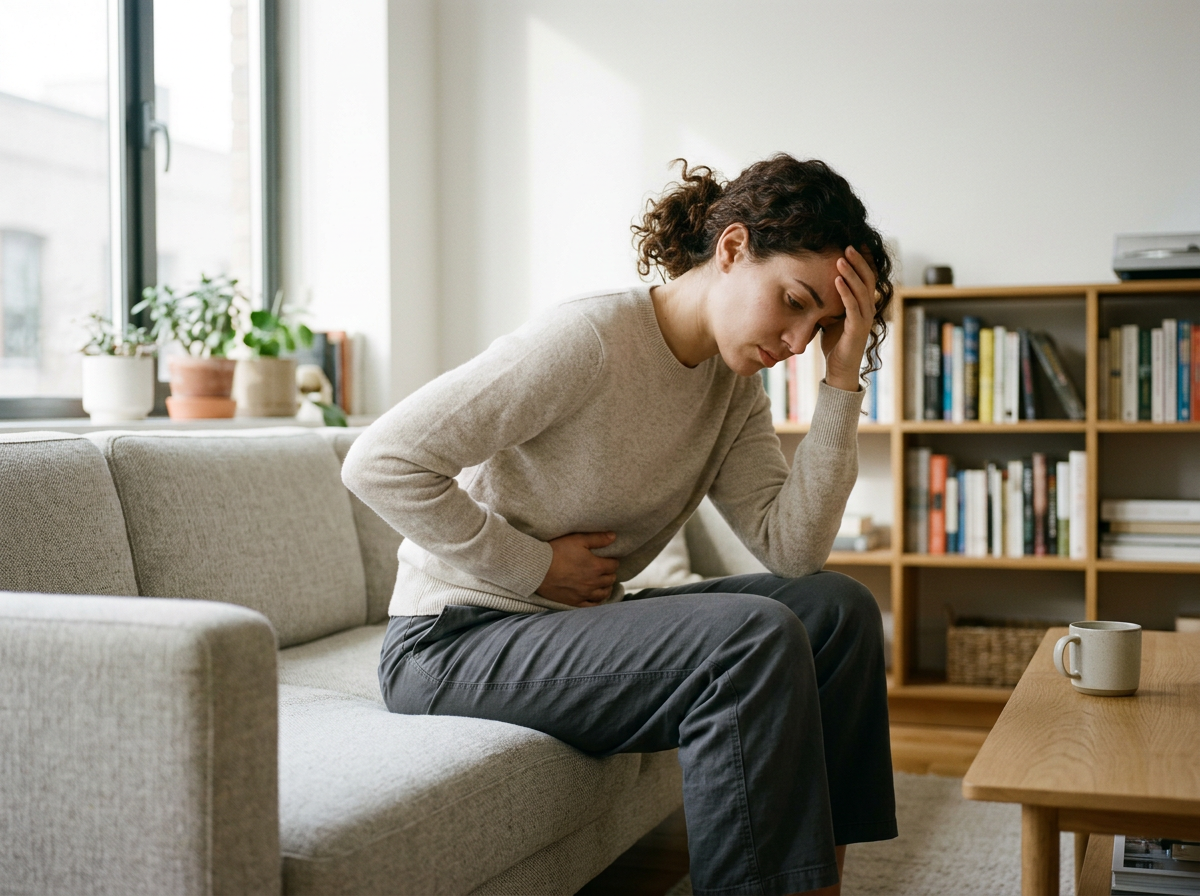
Why did the tests come back normal?
IBS is what's now called a disorder of gut–brain interaction. The research picture is consistent: disordered communication between the gut and the brain drives disturbed motility, visceral hypersensitivity (gut nerves that signal too loudly), and altered processing of those signals in the central nervous system. In many people it begins after a gut infection; it's also more common in women and often occurs with stress and anxiety, not as the cause, but as part of the same nervous-system picture.
Where testing can fail to give you answers: colonoscopies and blood tests examine structure; inflammation, ulcers, growths, coeliac damage. IBS is a problem of function; how the system moves, senses and communicates. A perfectly normal-looking bowel can still be moving erratically and signalling pain at normal stretch. The tests aren't wrong. They're just answering a different question.
Your normal results are genuinely valuable
This part can get skipped over in the "everything's fine" conversation, so lets me expand on it further.
Those tests did essential work: coeliac serology ruled out coeliac disease, and faecal calprotectin, a marker of gut inflammation, is precisely how inflammatory bowel disease is separated from IBS. Normal calprotectin plus normal bloods means the dangerous structural diagnoses are off the table. That's not "nothing", that's an excellent foundation to continue on from.
Modern guidelines are clear on what happens next: IBS should be a positive diagnosis, made on symptom criteria (the Rome criteria; abdominal pain related to defecation, with a change in stool form or frequency) once red flags are excluded. Current Australian guidance says exactly this: positive clinical diagnosis when criteria are met, alarm features are absent, and simple screening is clear.
It's not in your head, it's in your nervous system
As the gut–brain axis is involved, people hear "stress" and translate it as "they think I'm making it up" or that they caused it by stressing. The gut–brain axis is physiology, not psychology. It's a signalling network, nerves, neurotransmitters, immune messengers, and the microbiome all participate. When research describes IBS as a microbiota–gut–brain axis disorder, it's describing hardware and signalling, not imagination.
Stress doesn't create the wiring problem, it turns up the volume making the problem more obvious. Which is why "just relax" fails as treatment, and also why the nervous system can't be ignored in a serious IBS plan.
So, what does evidence-based care look like after normal tests
This is where guidelines and good practice align together:
A structured dietary approach, run properly. The low-FODMAP diet has the strongest dietary evidence in IBS, ranking first for global symptoms and bloating in network meta-analysis. it's a short-term diagnostic tool with a deliberate reintroduction phase to identify your triggers. Research consistently notes that trials rarely test the reintroduction phase, and unsupervised versions tend to end in unnecessary restriction. Guidelines recommend it as a limited trial, ideally with practitioner support.
Bowel habit as a treatment target. Constipation and erratic transit amplify pain and bloating; treating them directly is often the fastest visible win.
The nervous system, treated seriously. Gut-directed psychological therapies are guideline-recommended for IBS. This is a primary method of treatment, not as a secondary useful adjunt, because treating the signalling side of a gut–brain disorder works.
Targeted extras, chosen deliberately. Specific probiotic strains have evidence for specific symptoms, the key word being specific (I've written a full evidence breakdown).

Where does nutrition and naturopathy fit in this picture?
My role isn't to re-run or reinterpret the tests your doctors already did, it's the part that rarely fits inside a short medical appointment: the detailed history, the pattern-finding across meals, bowels, sleep, stress and cycle, running the dietary process properly so it ends in more foods rather than fewer, and building the plan into your actual routine. Evidence-based naturopathy and nutrition works alongside your GP, not instead of them.
Please note: if you have red flags, unintended weight loss, bleeding, symptoms waking you at night, fever, new onset over 50, or a family history of bowel cancer or IBD, that requires GP conversation first.
Two questions everyone asks
"Is this permanent?" IBS typically runs a relapsing and remitting course, meaning it flares and settles rather than progressing. It's not degenerative and it doesn't raise your risk of bowel cancer or turn into IBD, but "just living with it" isn't a strategy either. The realistic goal of good treatment is effective management; it's identifying your triggers and turning the volume down far enough that your gut stops ruining your social calendar. For most people who implement the process properly, that's a realistic and achievable outcome.
"Why didn't anyone explain this before?" Its usually not negligence. The full IBS mechanisms and gut–brain explanation, when done properly, takes longer than a standard doctors consult, and our medical system is built to find and treat structural disease, which isn't IBS. That's exactly the gap practitioners like me exist to fill through effective diet and lifestyle adjustments.
Start with data, not another guess
The single most useful thing you can bring to any practitioner, me or anyone else, is a week of real information about what your gut is actually doing. My free 7-Day Digestive Pattern Tracker takes five minutes a day and provides a valuable insight into your patterns.
And if you're done collecting normal test results and ready to work on the problem: Book a consult.
__________________________________________________________________________________________________________________________________________________________________________________________
This article is general information, not personalised health advice. It doesn’t replace assessment by a qualified practitioner who knows your history, especially if you have any of the red-flag symptoms above.
References
Ford AC, et al. Irritable bowel syndrome. The Lancet, 2020. https://consensus.app/papers/details/59611c211d0757a0942e9ec56647f770/
Black CJ. Review article: Diagnosis and investigation of irritable bowel syndrome. Alimentary Pharmacology & Therapeutics, 2021. https://consensus.app/papers/details/091207a3783f5039a876113fbb22fb6b/
Lacy BE, et al. ACG Clinical Guideline: Management of Irritable Bowel Syndrome. The American Journal of Gastroenterology, 2020. https://consensus.app/papers/details/8198fd7fd8f95479b0028563c5ff4598/
Morrison S, et al. Diagnosis and management of irritable bowel syndrome. Australian Prescriber, 2026. https://consensus.app/papers/details/1c941231d1af56ac9b94597401469137/
Kapel N, et al. Fecal Calprotectin for the Diagnosis and Management of Inflammatory Bowel Diseases. Clinical and Translational Gastroenterology, 2023. https://consensus.app/papers/details/bcdb9447745f54a4b9bcd577a4e33516/
Black CJ, et al. Efficacy of a low FODMAP diet in irritable bowel syndrome: systematic review and network meta-analysis. Gut, 2021. https://consensus.app/papers/details/c000bf20ba75573c90eaaa42d0ae3364/
Hillestad EMR, et al. Gut bless you: The microbiota-gut-brain axis in irritable bowel syndrome. World Journal of Gastroenterology, 2022. https://consensus.app/papers/details/c4823b1a81865d279d7d2d5d62346520/